



In high-volume architectural hardware production, the difference between a profitable batch and a costly rework cycle often starts at the polishing station. Door handles made from zinc die castings, forged brass, or machined stainless steel must be leveled, refined, and measured before plating or PVD can deliver a premium appearance. Even small inconsistencies in surface preparation can raise rejection rates, delay shipments, and expose defects that coatings cannot hide. This article explains how manufacturers can build a scalable polishing process using defined roughness targets, gloss measurements, dimensional controls, and repeatable automation practices to achieve consistent cosmetic quality without sacrificing throughput.
Why Door Handle Polishing Matters for Scalable Finish Quality
Achieving consistent finish quality across high-volume production runs is the primary objective of an industrial door handle polishing solution. Polishing acts as the critical bridge between raw metal forming—such as zinc die casting, brass forging, or stainless steel machining—and the final decorative coating.
In commercial manufacturing, inadequate polishing is a leading cause of downstream failures. Without strict process controls, polishing inconsistencies can push final plating rejection rates above 15% to 20%—an illustrative range that varies depending on the specific industry and baseline quality—resulting in severe material waste and production bottlenecks.
Common Commercial Problems Solved by Professional Polishing
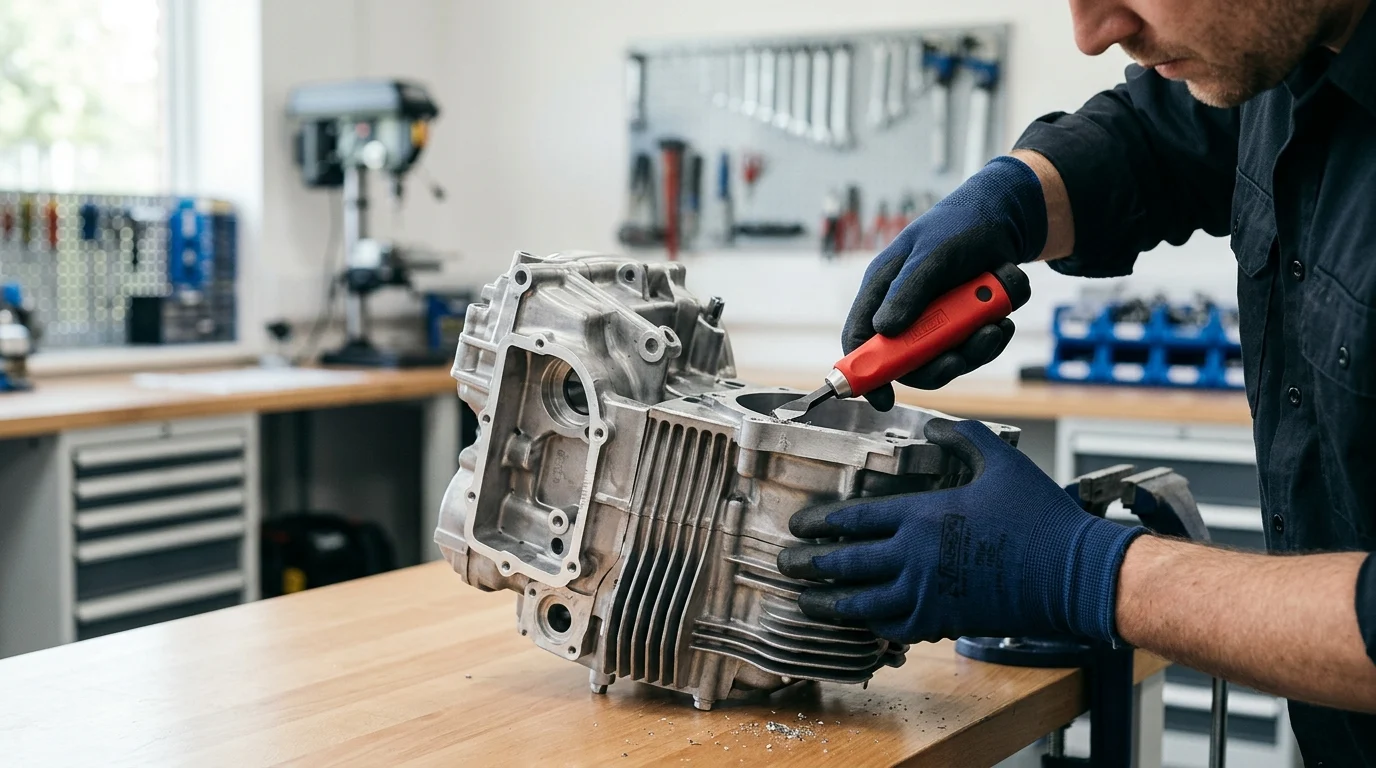
Professional door handle polishing mitigates several prevalent commercial manufacturing defects. Raw castings frequently exhibit parting lines, flash, micro-porosity, and "orange peel" textures. If these imperfections are not leveled during the polishing stage, subsequent electroplating or Physical Vapor Deposition (PVD) will magnify them.
Implementing a standardized polishing protocol reduces cosmetic defect rates at the plating stage by up to 40%, a typical benchmark observed in commercial hardware manufacturing. By ensuring a uniform substrate, manufacturers directly protect profit margins, minimize scrap, and prevent delayed shipments caused by unexpected rework.
How to Define Polishing Standards for Cosmetic and Functional
Quality
Establishing stringent polishing standards requires moving beyond subjective visual checks to quantifiable metrics. For architectural hardware, cosmetic quality is often defined by viewing the component under standard lighting (e.g., D65 daylight) at a specific distance, typically 600 mm, to identify visible scratches, pits, or directional polishing marks.
Functional quality dictates that the polishing process must not alter critical dimensional tolerances. Particularly around the spindle hole, rosette threading, and grub screw locations, material removal must be restricted to less than 0.05 mm to ensure proper mechanical assembly. Buyers frequently utilize standards published by organizations like ISO (such as ISO 1302 or ISO 4287 for surface texture) to define baseline surface acceptance criteria and establish clear supplier expectations.
Technical Specifications That Control Polishing Quality

The technical execution of door handle polishing relies on precise, quantifiable specifications. Manufacturers must control abrasive types, applied pressure, and processing time to achieve the desired surface topography before applying final finishes.
Finish Targets, Gloss Levels, and Roughness Values
Finish targets are strictly defined by surface roughness (Ra) and gloss units (GU). For a high-end mirror finish prior to chrome plating, the surface roughness must typically be reduced to an Ra value of less than 0.05 µm. Gloss levels are measured using a gloss meter at a 20-degree angle, with premium polished brass or stainless steel expected to exceed 800 GU. It is important to note that 20-degree measurement is primarily relevant for high-gloss surfaces; for satin or brushed finishes, measuring at 60 or 85 degrees is the industry standard.
| Finish Grade | Target Roughness (Ra) | Typical Application | Downstream Process |
|---|---|---|---|
| Coarse / Satin | 0.40 - 0.80 µm | Commercial levers | Brushed Nickel / PVD |
| Standard Bright | 0.10 - 0.20 µm | Residential hardware | Standard Electroplating |
| Mirror Polish | < 0.05 µm | Luxury architectural | High-gloss Chrome / Brass |
Impact of Base Material, Plating, Coating, and Casting Quality
The base material fundamentally alters the polishing specification and the required abrasives. Zinc alloy (Zamak) is relatively soft and requires lower polishing pressure and less aggressive wheels to avoid surface burning, gouging, or exposing sub-surface porosity inherent to the die-casting process.
Conversely, austenitic stainless steel (such as 304 or 316 grades) possesses high work-hardening characteristics. Achieving a mirror finish on 316 stainless steel requires approximately 30% to 40% more polishing time and heavier, more aggressive sisal buffing wheels compared to zinc die-cast equivalents. The harder stainless steel demands greater abrasive force to level the surface topography, whereas the softer zinc achieves comparable finishes with gentler processing.
Process Steps to Document for Consistent Results
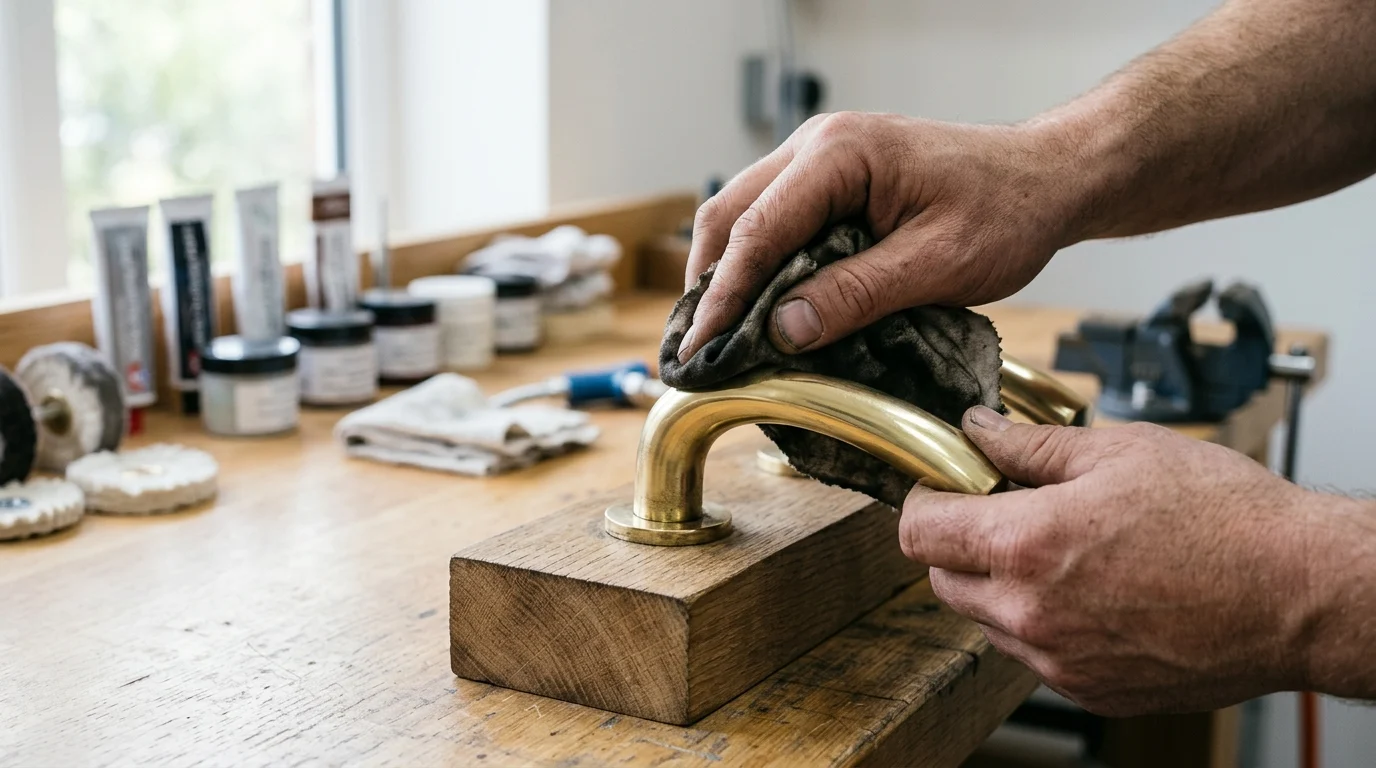
A documented process routing is essential for scalability and lot-to-lot consistency. The sequence typically involves three distinct stages: initial grinding using 80 to 120 grit abrasive belts to remove parting lines, intermediate pre-polishing using 320 to 400 grit to smooth the grinding marks, and final color buffing utilizing cotton wheels and specialized alumina or rouge compounds.
To guarantee uniformity across thousands of units, engineers must document each step's specific wheel RPM, compound application frequency, and exact cycle time in the standard operating procedure (SOP).
Manual, Semi-Automatic, and Automated Polishing Methods
Selecting the appropriate polishing method is a critical operational decision that balances capital expenditure, throughput requirements, and the geometric complexity of the door handle designs. The industry utilizes manual, semi-automatic, and fully automated systems, each presenting distinct economic and technical profiles.
Key Criteria for Comparing Polishing Methods
When comparing polishing methods, manufacturers evaluate throughput capacity, part complexity, and initial investment. Manual polishing requires minimal capital expenditure but is constrained by high labor costs and variable output, typically yielding 30 to 50 parts per operator per hour.
In contrast, automated systems require substantial upfront investment but fundamentally shift the cost-per-part equation for high-volume orders, delivering exceptional consistency at scale.
| Polishing Method | Capital Expenditure | Typical Throughput | Ideal Geometry |
|---|---|---|---|
| Manual | Very Low (< $5,000) | 30 - 50 parts/hour | Highly complex, low volume |
| Semi-Automatic | Medium ($20k - $50k) | 100 - 150 parts/hour | Cylindrical, simple curves |
| Fully Robotic | High ($150k+) | 200 - 300 parts/hour | Standardized, high volume |
When Automated Polishing Machines Outperform Manual Work
Fully automated polishing machines, particularly 6-axis robotic cells, drastically outperform manual labor in high-volume, standardized production. These robots process 200 to 300 parts per hour while utilizing active force control sensors to maintain a constant pressure of 10 to 50 Newtons against the buffing wheel, compensating for wheel wear in real-time.
This automation eliminates the ergonomic fatigue experienced by manual polishers and ensures that the 10,000th handle is identical to the first. For production runs exceeding 50,000 units annually, robotic automation is the superior choice for stabilizing lead times and quality.
Where Hybrid Polishing Cells Offer the Best Trade-Off
Despite the advantages of automation, highly intricate door handle designs—such as those featuring deep recesses, sharp internal corners, or ornate classical motifs—often cause robotic systems to struggle with accessibility and collision avoidance.
In these scenarios, hybrid polishing cells offer the optimal trade-off. For example, on a lever handle with a decorative fluted neck, a robot handles 80% of the bulk cylindrical surface area for maximum efficiency. Skilled manual operators then perform targeted touch-ups on the remaining 20% around the intricate fluting, blending the speed of automation with human dexterity to achieve a flawless finish.
Quality Control, Compliance, and Handling Requirements
Maintaining a robust door handle polishing solution requires rigorous quality control frameworks, adherence to industrial safety regulations, and meticulous handling procedures to protect the vulnerable polished surfaces prior to coating.
Inspection Checkpoints and Sampling Plans
Inspection protocols must be systematized using statistical sampling plans based on recognized ISO standards (such as ISO 2859-1) or ANSI/ASQ Z1.4. A standard industry approach applies an Acceptable Quality Limit (AQL) of 1.5 for major defects, such as deep scratches or exposed porosity, and 4.0 for minor defects like slight compound residue.
Inspectors utilize specialized lux meters and highly directional LED lighting to identify microscopic polishing anomalies that could cause electroplating failures, ensuring only compliant batches move to the plating line.
Safety, Dust Extraction, Wastewater, and Chemical Controls
The polishing process generates hazardous byproducts, necessitating stringent environmental and safety controls. Metallic dust from polishing aluminum or zinc poses severe explosion risks; therefore, facilities must utilize wet dust collectors or ATEX-certified dry extraction systems maintaining duct airflow velocities of at least 20 meters per second.
Additionally, wastewater containing liquid polishing compounds and metal particulate must be chemically treated, coagulated, and filtered before discharge to comply with local and international environmental regulations.
Packaging, Handling, and Storage to Protect Finished Handles
A perfectly polished door handle is highly susceptible to micro-scratching and oxidation if mishandled. Immediately after final buffing and ultrasonic cleaning, handles must be packaged using non-abrasive materials to preserve the surface finish.
Standard industry practice involves isolating each unit in individual 40-gram non-woven fabric bags or custom-molded EPE foam trays. Storage environments must be climate-controlled, maintaining relative humidity below 50% to prevent flash rusting or tarnishing before the handles are successfully plated or coated.
How Buyers Should Choose a Door Handle Polishing Solution
Procuring a reliable door handle polishing solution requires buyers to evaluate potential suppliers through a strategic lens, focusing on long-term capability, total cost, and alignment with specific product portfolios.
Supplier Capability Questions to Ask
Buyers must thoroughly assess a supplier's technical infrastructure and capacity. Critical questions include asking for their maximum monthly throughput, the specific multi-axis automation technologies utilized, and their compound management systems.
Furthermore, buyers should verify the supplier's Minimum Order Quantity (MOQ) thresholds. Automated polishing lines typically require MOQs set around 3,000 to 5,000 units to justify the robotic programming and fixture setup times, which must align with the buyer's inventory strategy and production forecasting.
How to Calculate Total Cost of Ownership
The unit price quoted for polishing is only a fraction of the Total Cost of Ownership (TCO). Buyers must factor in the hidden costs associated with scrap rates, logistical movements, and potential rework.
Reworking a handle that fails post-plating inspection due to poor underlying polishing typically costs 2 to 3 times the initial polishing fee—an illustrative range based on typical industry experience—as it requires chemical stripping, re-polishing, and re-plating. A supplier with a slightly higher upfront cost but a defect rate below 1% will yield a significantly lower TCO than a cheaper supplier generating a 5% defect rate.
Decision Framework for Selecting the Right Polishing Solution
Selecting the optimal solution relies on a decision matrix balancing production volume against geometric complexity. For low-volume, highly ornate architectural hardware, partnering with a boutique manual polishing facility remains a viable and necessary approach.
However, for mass-market commercial and residential door handles, buyers must mandate suppliers utilizing robotic or semi-automated polishing cells. Ultimately, selecting the right door handle polishing solution requires careful supplier due diligence. By thoroughly evaluating a partner's technical capabilities, quality control frameworks, and automation infrastructure, buyers can minimize downstream coating failures and establish a more resilient manufacturing supply chain.
Key Takeaways
- Define polishing acceptance criteria with measurable targets such as Ra value, gloss units, viewing distance, and standard lighting instead of relying only on subjective visual checks.
- Target Ra below 0.05 µm for high-end mirror finishes before chrome plating when the specification requires a premium reflective surface.
- Control material removal to less than 0.05 mm around spindle holes, threading, grub screw positions, and other assembly-critical features.
- Standardized polishing protocols can reduce plating-stage cosmetic defects by up to 40% in typical commercial hardware manufacturing environments.
- Use the correct gloss measurement angle: 20 degrees for high-gloss surfaces and 60 or 85 degrees for satin or brushed finishes.
Frequently Asked Questions
Why is polishing critical before plating or PVD?
Polishing levels casting marks, flash, pits, and orange-peel texture before decorative coating. If these defects remain, chrome plating, electroplating, or PVD can magnify them, increasing rework, scrap, and customer-visible cosmetic failures.
What surface roughness is needed for a mirror door handle finish?
For premium mirror finishes before chrome plating, manufacturers typically target Ra below 0.05 µm. The exact requirement depends on material, coating type, customer specification, and inspection method.
How can manufacturers reduce plating rejection rates?
Use a standardized polishing process with controlled abrasives, pressure, cycle time, and inspection criteria. Consistent substrate preparation can significantly reduce cosmetic defects at plating and help avoid bottlenecks caused by rework.
What dimensions must be protected during door handle polishing?
Critical areas include spindle holes, rosette threading, grub screw locations, and assembly interfaces. Material removal should be tightly controlled, often below 0.05 mm, to maintain mechanical fit and function.
How is door handle finish quality inspected?
Common checks include visual inspection under standard lighting, surface roughness measurement, and gloss meter readings. High-gloss surfaces are often measured at 20 degrees, while satin or brushed finishes may use 60 or 85 degrees.